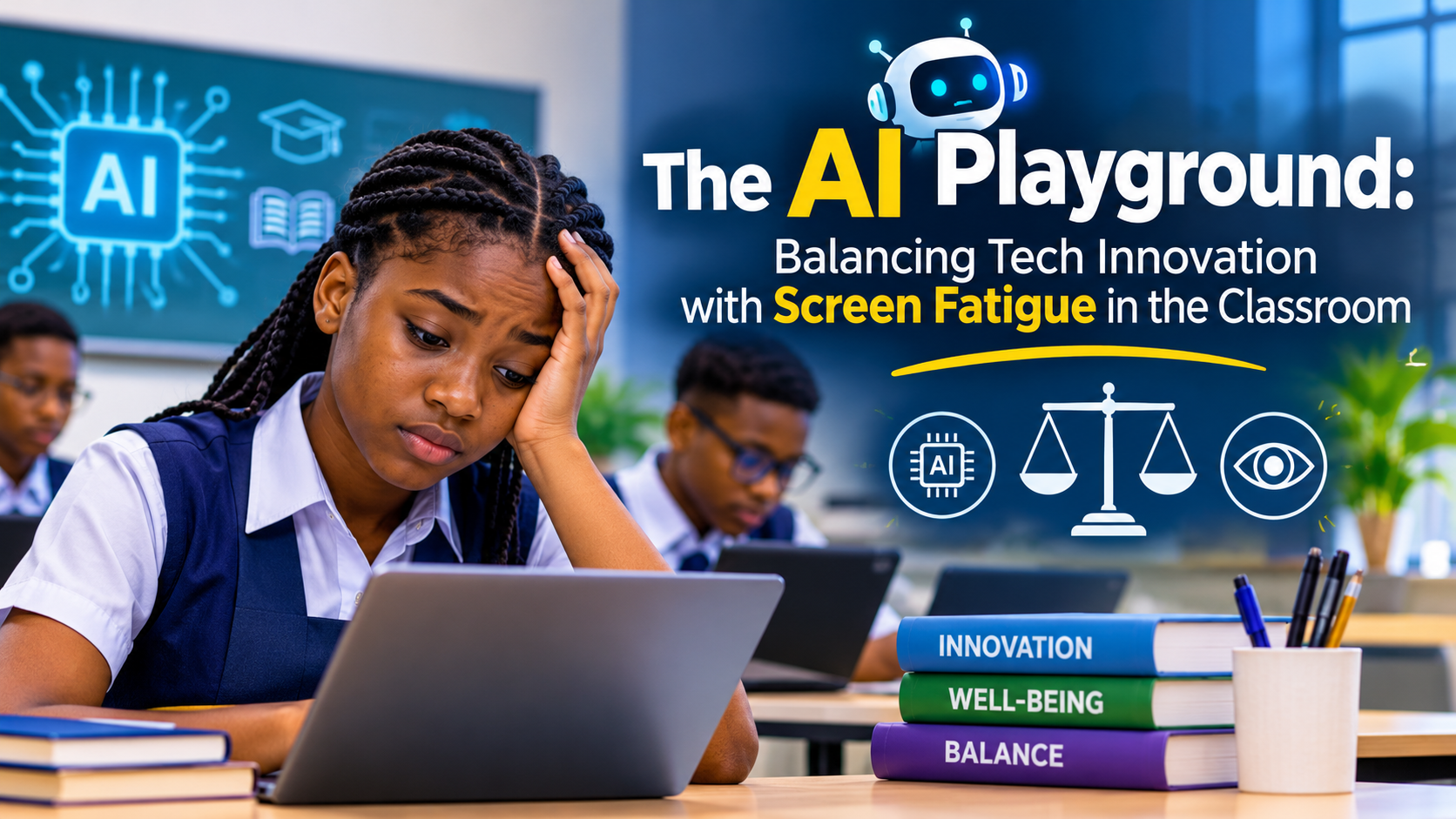
The AI Playground: Balancing Tech Innovation with Screen Fatigue in the Classroom
We are living through the most rapid technological shift in human history, and its epicenter is the classroom. From AI-powered tutors that adapt to a child’s reading level in real time to virtual reality headsets that take history classes on field trips to ancient Rome, the school sector is fully embracing automation.
However, a countermovement is quietly gaining traction. As digital tools become the default, educators and parents are facing a complex paradox: how to harness the immense power of educational technology without succumbing to student screen fatigue and cognitive overload.
The Promise of the Smart Classroom
There is no denying the benefits of the digital shift in education. When implemented correctly, tech integration solves some of the oldest challenges in the sector:
* Hyper-Personalization: AI algorithms can instantly analyze a student's weak points in a subject like algebra and generate custom exercises, functioning like a private tutor for every child.
* Global Collaboration: A classroom in Lagos can effortlessly connect with a classroom in Tokyo for a joint science project, breaking down geographic barriers.
* Administrative Relief: Automated grading and lesson-planning assistance give teachers hours back in their week, allowing them to focus on what they do best: mentoring and teaching.
The Pushback: Digital Fatigue and the "Low-Tech" Revival
Despite these advantages, the honeymoon phase with classroom technology is ending. A growing body of research highlights the unintended consequences of over-digitization, leading to a visible shift in perspective among school administrators.
1. The Screen Time Dilemma
Students are increasingly suffering from "zoom fatigue," eye strain, and shortened attention spans. When a child spends seven hours at school on a laptop, only to go home and do homework on a tablet, their cognitive retention and creative thinking can actually decline.
2. The Return of the Physical Textbook
In a surprising twist, several highly developed school systems that went completely digital a decade ago are now actively reinvesting in paper textbooks and handwriting exercises. Educators are finding that physical manipulation of books and pens improves memory retention, special awareness, and deep focus.
3. The Need for "Digital Nutrition"
Forward-thinking schools are moving away from asking how much technology to use, and are instead asking how to use it. This concept, often called "digital nutrition," categorizes tech into "junk tech" (passive video watching or mindless educational games) and "nourishing tech" (coding, collaborative design, or creation tools).
Striking the Golden Balance
The schools that will thrive in the coming decade are not those that completely ban technology, nor those that completely automate their classrooms. The future belongs to the blended framework.
Innovative schools are setting strict boundaries: using AI for intensive 20-minute diagnostic sessions, followed by two hours of tech-free, group discussions, physical building blocks, or outdoor learning. They are treating technology as a high-powered calculator—a tool to enhance human capability, not replace human interaction.
The Bottom Line
Technology is a phenomenal servant but a terrible master. As the school sector navigates this digital frontier, the ultimate goal isn't to create the most high-tech classroom possible, but to build an environment where technology serves to make us more deeply human, curious, and connected.
Join the Debate: Has your child's school gone too far with digital apps and screens, or do you think they aren't using enough technology? Share your experiences in the comments below!