23
Oct 2026
by Blessing Nkemakolam
| General
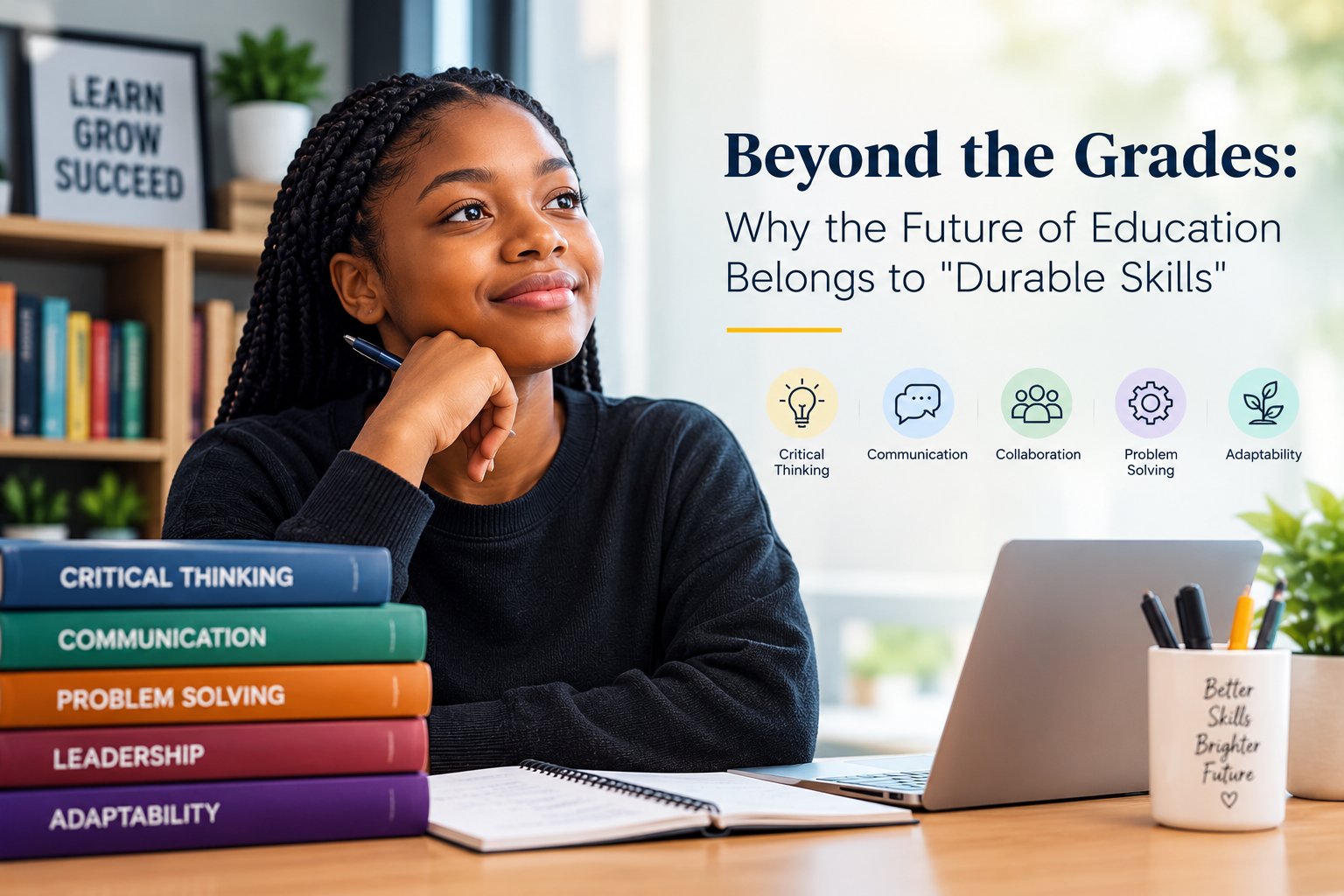
Beyond the Grades: Why the Future of Education Belongs to "Durable Skills"
We have all been there. Sitting at a school desk, staring at a blackboard, memorizing a long list of dates, formulas, or definitions just to pass Friday’s quiz. For decades, traditional schooling has operated like an industrial assembly line: students absorb information, replicate it on a test, and move to the next grade.
But as technology evolves at a breakneck pace, a quiet revolution is taking place in classrooms around the globe. Educators are moving away from traditional rote learning and stepping into a new era: student-centered, project-based learning.
The truth is, in a world where search engines can answer fact-based questions in a fraction of a second, the value of education is no longer about what you know. It’s about what you can do with what you know.
The Rise of "Durable Skills"
In modern career landscapes, technical software and industry-specific tools change constantly. What doesn’t change is the need for what experts call durable skills—often referred to as soft skills. According to data tracked by leading education resources like Edutopia and the Cult of Pedagogy, the most successful modern classrooms are those that deliberately foster:
- Critical Thinking & Problem-Solving: Learning how to analyze bias, weigh evidence, and solve ambiguous, real-world problems.
- Media and Digital Literacy: Moving past basic tech skills to understand digital citizenship, data privacy, and how to verify information online.
- Emotional Intelligence & Collaboration: Understanding how to work in diverse, cross-functional teams, manage conflict, and practice empathy.
From Passive Listening to Active Creation
How does this shift look in practice? Instead of reading a textbook chapter on environmental science, students might work in groups to design a campus recycling system or draft a conservation proposal for their local town council.
This method—often championed by platforms like the George Lucas Educational Foundation's Edutopia—sparks intrinsic curiosity. When students see a direct connection between their schoolwork and real-world impact, engagement skyrockets, and the risk of student burnout plummets.
The Growing Digital Divide
Of course, this educational evolution isn’t happening equally everywhere. Global institutions like the World Bank Education Blog frequently highlight the deep disparities in how technology is integrated into classrooms globally. As some school districts adopt advanced active recall tools and artificial intelligence platforms, others are still fighting for basic foundational learning infrastructure.
Closing this gap isn't just about buying more tablets or laptops; it is about providing teachers with the professional development they need to facilitate meaningful, tech-backed learning recovery.
What This Means for the Future
Education is no longer a finite phase of life that ends when you receive a diploma or degree. It is a lifelong practice. By shifting our focus from rigid, test-driven metrics toward building adaptable minds, we prepare the next generation not just to pass exams, but to thrive in an unpredictable future.
"What is one skill you wish you had been taught in school that you actually use every day in your adult life? Let’s discuss in the comments below!"